
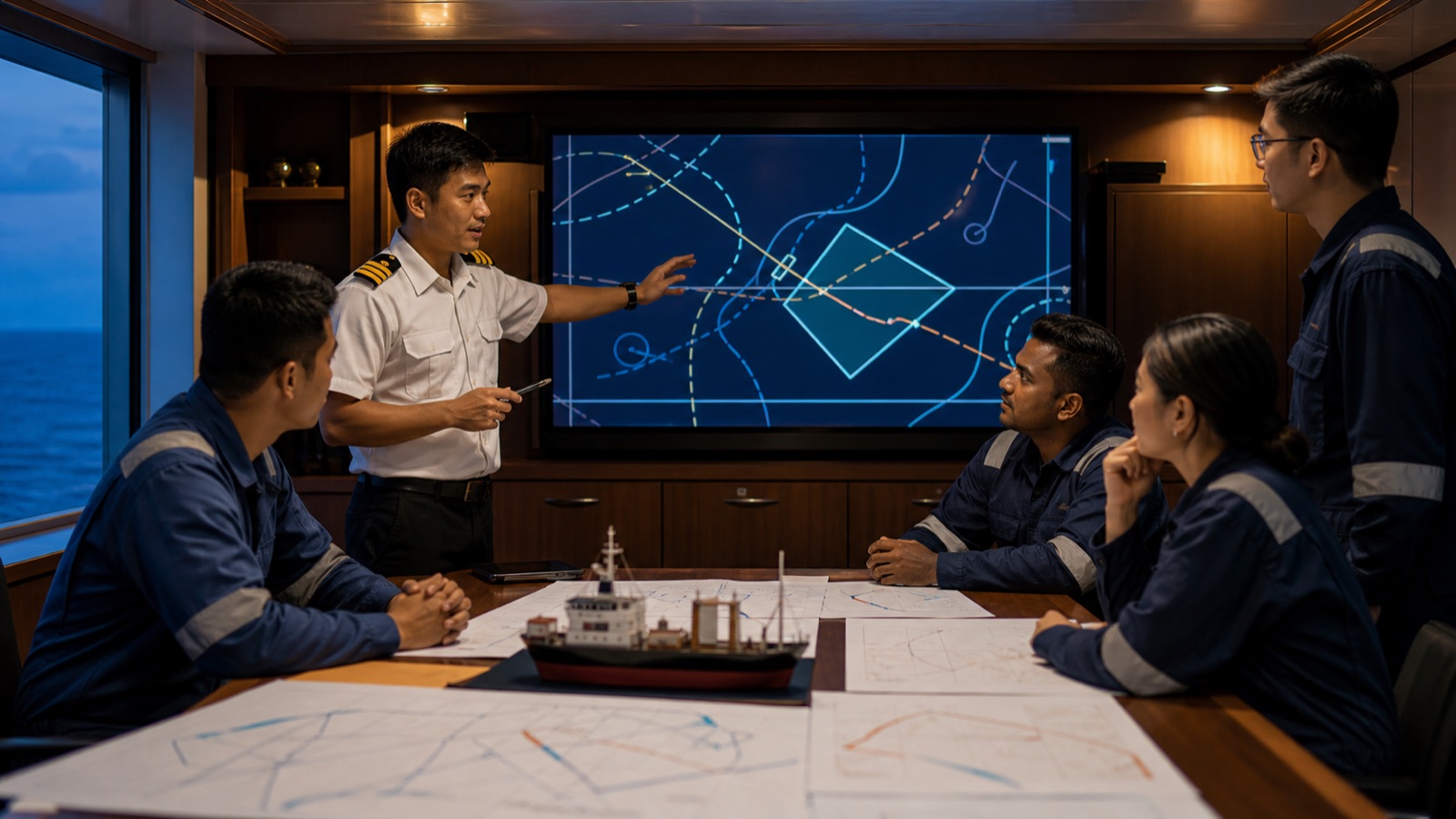
title: "Working in High-Risk or Conflict-Affected Waters: Questions to Ask"
excerpt: "A calm preparation guide for seafarers whose voyage may enter an area affected by conflict, piracy, or heightened security risk."
meta_description: "Questions seafarers should ask about contracts, briefings, security, insurance, communication and support before high-risk voyages."
focus_keyword: "seafarer high risk area rights"
tags: [high-risk areas, conflict, maritime security, seafarer rights, family]
—
# Working in High-Risk or Conflict-Affected Waters: Questions to Ask
Security conditions can change quickly. A route described as routine when a contract was signed may later be affected by armed conflict, piracy, military tension, or another serious threat. Static online lists become outdated, so seafarers should rely on current company briefings, applicable agreements, authorities, and trusted maritime organisations.
The most useful preparation begins with questions—not assumptions.
Before the voyage: understand the current risk
Ask the master or company for the latest voyage-specific security assessment and briefing. You should understand the nature of the risk, planned controls, expected changes to duties, and how updates will reach the crew.
Useful questions include:
- Is the route currently designated under any applicable agreement or company policy?
- What protective measures and drills apply to this voyage?
- Has the crew received adequate familiarisation for those measures?
- What are the emergency communication and mustering arrangements?
- How will the company reassess the route if conditions change?
Do not depend on social-media maps or old news screenshots for operational decisions.
Review your contract and collective agreement
Rights and entitlements may come from several layers: the employment agreement, an applicable collective bargaining agreement (CBA), flag-state law, port-state law, and international standards. Before sailing, identify which documents apply and keep accessible copies.
Ask clearly about:
- Any additional compensation or allowance.
- Insurance and medical coverage.
- Repatriation arrangements.
- Contractual provisions concerning designated warlike or high-risk areas.
- The process for raising an objection or requesting advice.
- The union or ITF contact relevant to the vessel.
Do not assume that a rule quoted for another vessel, flag, or CBA automatically applies to yours. NUSPM or another qualified representative can help you identify the right questions, but a specific legal conclusion may require specialist advice.
Know the security plan for your role
Security measures are effective only when crew understand them. Attend briefings and drills seriously. Know your assigned station, communications route, alarm signals, protective location, and responsibilities. Ask for clarification before the risk increases.
Never publish the vessel’s route, security arrangements, crew location, or real-time operational details on public social media. Personal posts can reveal patterns useful to hostile actors or increase family anxiety without reliable context.
Make a family communication plan
Periods of reduced connectivity or operational silence can be frightening ashore. Before entering a higher-risk area, agree with family members:
- The normal communication schedule and possible interruptions.
- A company or union contact for verified information.
- Who will handle finances or urgent documents at home.
- Which information should not be shared publicly.
- How to recognise rumours or impersonation attempts.
If a call is missed, family should not automatically assume an emergency. A clear plan reduces uncertainty.
If you feel unsafe or uninformed
Raise specific concerns through the shipboard and company procedures. Record factual information: the question asked, response received, date, relevant contract provision, and any unresolved safety issue. If appropriate, seek confidential advice from your union or ITF. ISWAN provides wellbeing support to seafarers and families facing conflict-related stress.
In immediate danger, follow the master, muster list, vessel security plan, and official emergency instructions. A website article cannot replace real-time operational command.
Protect your wellbeing
Fear, poor sleep, irritability, and difficulty concentrating can be normal responses to uncertainty. Maintain basic routines where possible, limit repeated exposure to alarming unverified content, and talk to a trusted person. Report fatigue that could affect safe work. Asking for support is responsible seamanship, not weakness.
Authoritative references
- ITF Seafarers: Rights resources
- ISWAN: Coping with conflict—a guide for seafarers and families
- IMO: SOLAS Convention
Image guidance
OFFICIAL REFERENCES
Verify at the source
- View official guidance ↗www.itfseafarers.org
- View official guidance ↗www.iswan.org.uk
- View official guidance ↗www.imo.org
This guide provides general educational information. Requirements and remedies depend on the vessel, flag, contract, collective agreement and circumstances. Seek qualified help for your case.