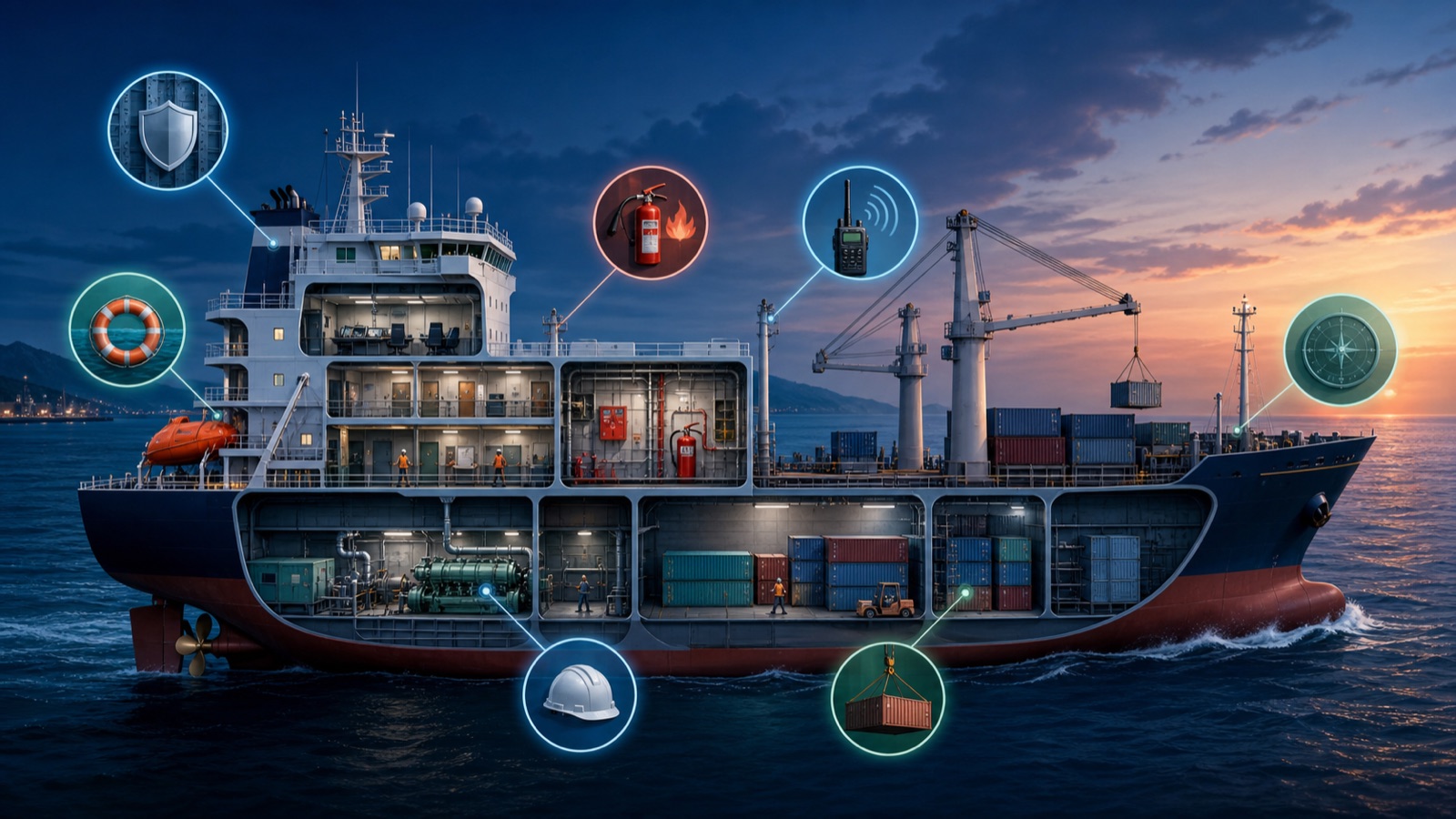
SOLAS—the International Convention for the Safety of Life at Sea—is one of shipping’s central safety treaties. Seafarers rarely “use SOLAS” as a single manual. They experience it through ship design, certificates, equipment, drills, operating procedures and inspections.
Six areas you meet on board
Construction and stability
Requirements influence watertight integrity, subdivision, machinery and electrical arrangements. Your practical responsibilities come from familiarisation, approved plans and ship procedures.
Fire protection
SOLAS supports structural fire protection, detection, alarms, escape and firefighting arrangements. Crew competence depends on knowing the vessel’s exact equipment, routes and muster duties—not on memorising a general article.
Life-saving appliances
Lifeboats, liferafts, personal lifesaving appliances, launching arrangements and drills are part of the system. Follow the vessel manual and trained command.
Radio communications
The convention supports the global maritime distress and safety communications framework. Qualified personnel, equipment readiness and correct procedures matter during distress, urgency and safety communication.
Navigation safety
SOLAS connects with carriage requirements and operational practices for safe navigation. Charts, bridge systems, voyage planning, equipment checks and human judgement work together.
Cargo and security
Requirements address safe carriage and securing for different cargoes, while associated security provisions influence ship and port security arrangements. The correct action depends on cargo documentation and vessel procedures.
How it relates to STCW and the ISM Code
SOLAS establishes major ship-safety obligations. STCW focuses on seafarer training, certification and watchkeeping. The International Safety Management framework turns safety and environmental policy into company and vessel procedures. They overlap in daily work but are not the same thing.
A practical onboard checklist
- Complete vessel-specific familiarisation before taking duty.
- Know alarm signals, escape routes, muster station and assigned role.
- Read the procedure for the equipment you operate.
- Report defects and unsafe workarounds promptly.
- Participate actively in drills and debriefs.
- Ask when a procedure, sign or responsibility is unclear.
- Never substitute an internet summary for an approved manual.
SOLAS is amended over time. The ship, administration and company must apply the requirements relevant to that vessel. A seafarer’s safest habit is to connect training with the current onboard system.
Authoritative references
OFFICIAL REFERENCES
Verify at the source
- View official guidance ↗www.imo.org
- View official guidance ↗www.imo.org
This guide provides general educational information. Requirements and remedies depend on the vessel, flag, contract, collective agreement and circumstances. Seek qualified help for your case.