
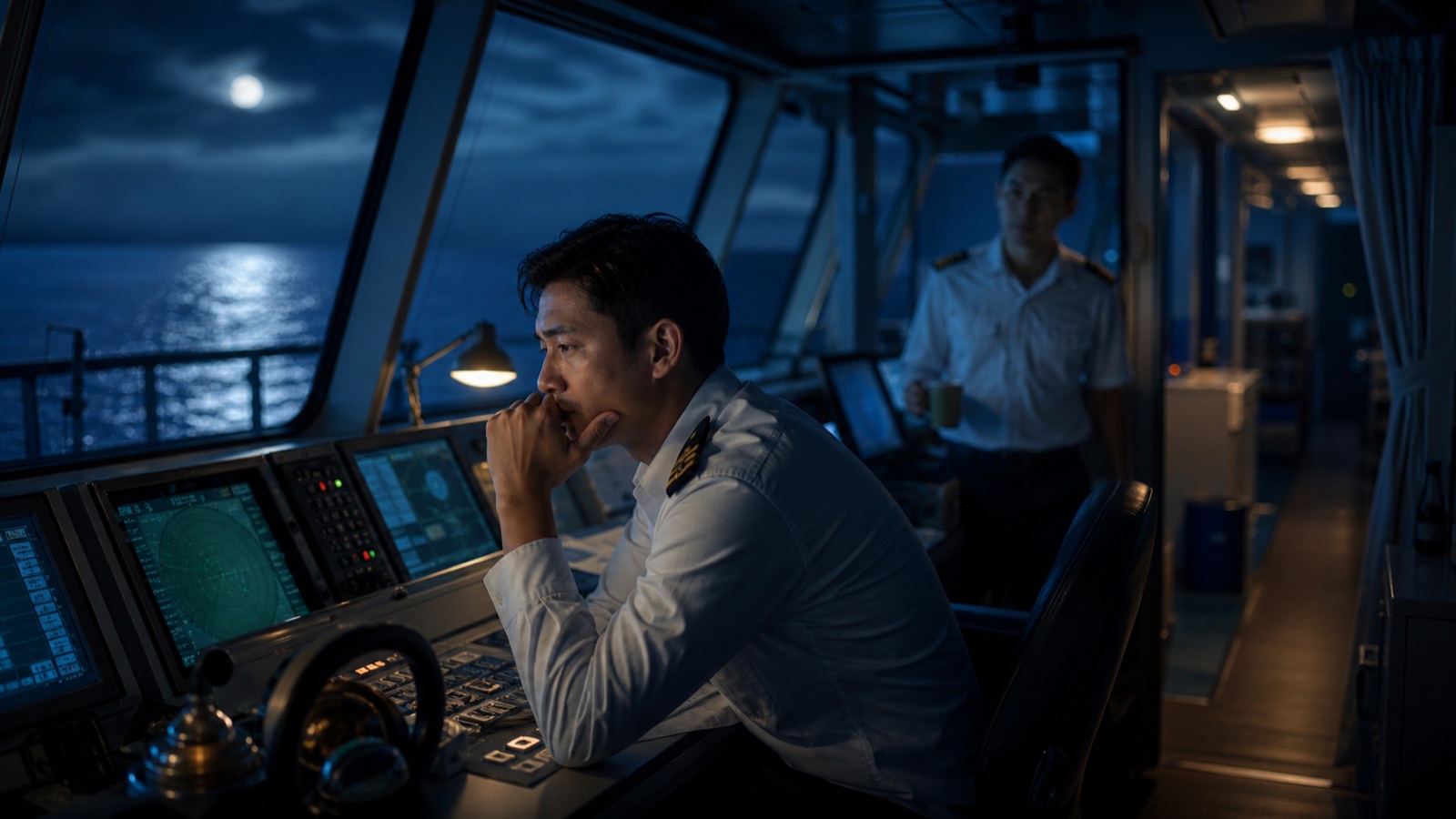
Fatigue is more than feeling sleepy. It can slow reaction, narrow attention, impair judgement and make routine errors harder to notice. At sea, those effects can combine with navigation, machinery and cargo hazards.
Warning signs
Look for changes such as:
- repeated yawning or heavy eyelids;
- difficulty focusing or remembering the last action;
- slower decisions and missed alarms;
- irritability, poor communication or unusual risk-taking;
- microsleeps or “losing” part of a watch;
- needing constant stimulation merely to stay alert.
Do not treat fatigue as laziness. Watch patterns, workload, manning, noise, heat, vibration, port calls, stress and disrupted sleep can all contribute.
If safety is affected now
Follow the vessel’s bridge, engine-room and safety procedures. Inform the responsible officer or master clearly that fatigue may affect safe performance. Request appropriate relief or risk control. Do not use caffeine or willpower as proof that you are fit for a safety-critical duty.
For a report, record facts: recent work and rest, call-outs, symptoms, task and risk. Avoid exaggeration and avoid minimising the problem.
Personal actions that can help
When the work system permits:
- protect scheduled sleep from avoidable interruptions;
- use a consistent wind-down routine;
- manage caffeine so it does not disrupt later sleep;
- eat and hydrate regularly;
- use approved nap arrangements if available;
- discuss persistent sleep difficulty with appropriate medical support.
These measures do not fix an unsafe schedule. The company and onboard leadership remain responsible for organising work and managing risk.
Report the cause, not only the symptom
A useful fatigue report connects the experience to operations: “After cargo work from [time] to [time], I had [rest facts] before the watch. I am experiencing [specific signs]. I am concerned about [task/risk].” Include recurring noise, schedule changes or administrative burden where relevant.
Near misses should be reviewed for fatigue contribution without automatic blame. The goal is safer manning, scheduling, work design and recovery.
Support a crewmate
If a colleague shows serious fatigue, speak privately and focus on observed facts. Encourage them to notify the appropriate officer. If an immediate hazard exists, follow the safety chain rather than assuming someone else has noticed.
Authoritative references
OFFICIAL REFERENCES
Verify at the source
- View official guidance ↗www.imo.org
- View official guidance ↗wwwcdn.imo.org
- View official guidance ↗www.iswan.org.uk
This guide provides general educational information. Requirements and remedies depend on the vessel, flag, contract, collective agreement and circumstances. Seek qualified help for your case.