
title: "Building a Mentally Healthy Ship: A Guide for Masters and Operators"
excerpt: "A systems-based guide to workload, leadership, psychological safety, confidential support, and continuous improvement onboard."
meta_description: "Practical guidance for masters and operators on building mentally healthy ships through systems, leadership and confidential support."
focus_keyword: "mentally healthy ship"
tags: [mental health policy, leadership, crew welfare, safety culture, ship operators]
—
# Building a Mentally Healthy Ship: A Guide for Masters and Operators
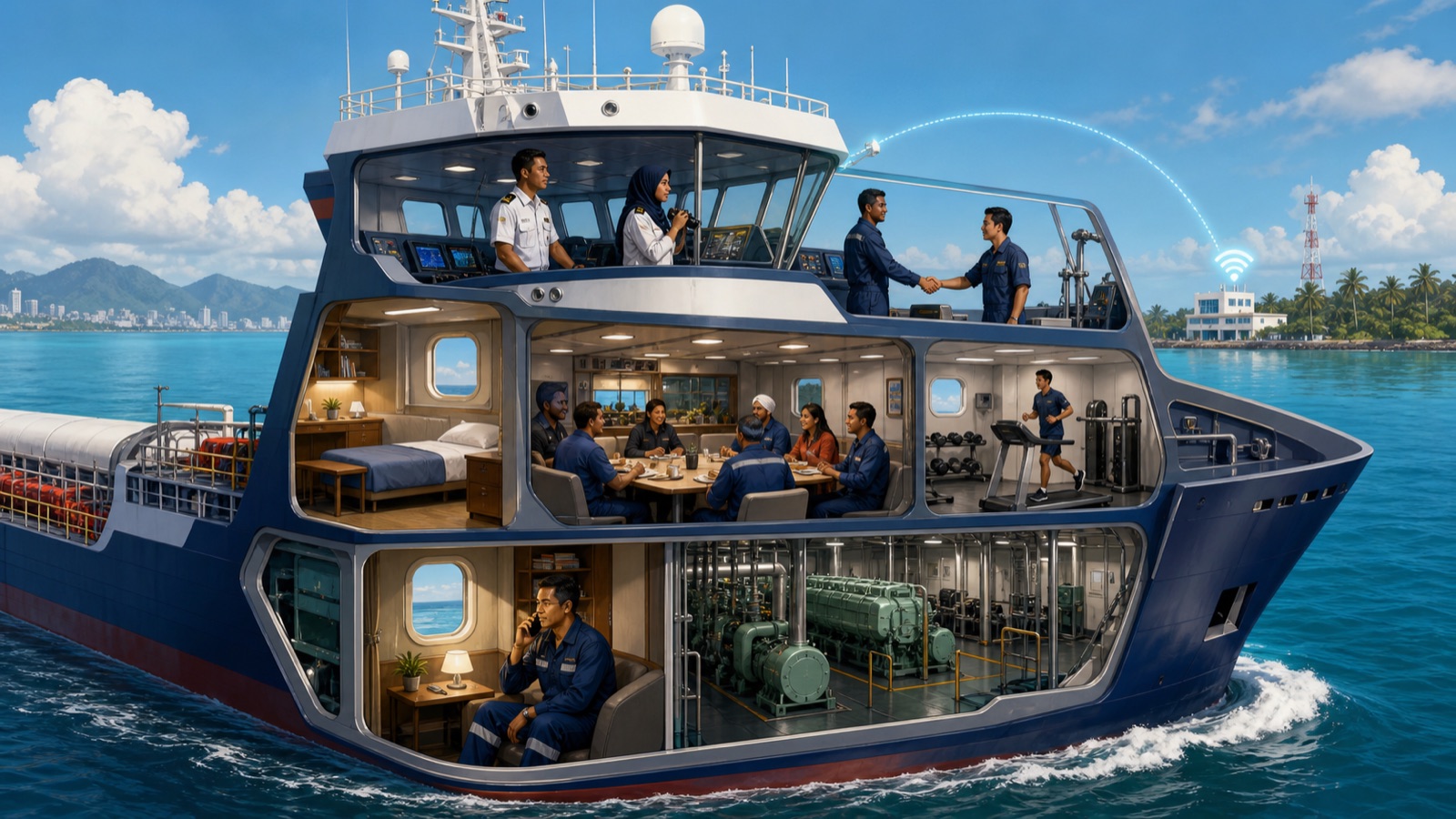
A mentally healthy ship is not created by posters, an app, or an annual wellbeing day. ISWAN’s guidance emphasises that employers have a critical role in mitigating known risks and establishing policies, procedures, and structures that protect seafarers’ mental health. The IMO’s human-element approach likewise treats people, organisations, and safe operations as connected.
Begin with work as it is actually done
Assess real conditions, not only written procedures. Examine workload, work-rest patterns, manning, noise, connectivity, food, accommodation, harassment risk, contract uncertainty, and the quality of shore support. Speak with different ranks, departments, nationalities, genders, and contract types.
Anonymous surveys can help, but they are insufficient if crew fear identification or never see action. Combine data with confidential conversations, near-miss learning, turnover, fatigue reports, complaints, and medical/welfare trends.
Make leadership behaviour a safety control
Crew are more likely to report fatigue, mistakes, harassment, and distress when leaders respond fairly. Masters and senior officers should:
- Explain decisions and operational changes.
- Correct privately where possible and never humiliate.
- Invite questions across language and rank boundaries.
- Treat fatigue reports as safety information.
- Intervene when jokes become discriminatory or threatening.
- Avoid diagnosing crew or demanding personal disclosure.
- Know how to activate shore-based professional support.
Psychological safety does not mean lowering operational standards. It means people can report risk, uncertainty, and error early enough to manage them.
Build clear pathways before an incident
Every crewmember should know where to go for ordinary support, confidential support, employment concerns, harassment complaints, medical assistance, and immediate danger. Display the pathway in accessible languages and explain it during familiarisation.
Define:
- Who receives a concern.
- What confidentiality can and cannot cover.
- How urgent risk is assessed.
- How shore management responds outside office hours.
- How retaliation concerns are handled.
- How care continues through port, repatriation, and return to work.
Test the pathway through realistic exercises without turning a personal crisis into entertainment.
Address causes, not only coping
Breathing exercises and peer support can be valuable. They cannot compensate for chronic sleep loss, unsafe manning, unpaid wages, bullying, or months without meaningful communication. When a pattern emerges, change the system that produces it.
Review watch arrangements, overtime, cabin disruption, internet access, food quality, shore leave, task planning, and workload peaks. If operational constraints cannot be removed immediately, document interim controls and ownership.
Protect confidentiality and dignity
Collect only necessary health information, restrict access, and avoid gossip. Do not use wellbeing data for performance scoring without a lawful, ethical basis. A crewmember who requests help should not automatically be treated as incompetent. Fitness-for-duty decisions belong with qualified processes.
Measure useful outcomes
Track whether crew know the support pathway, whether reports receive timely acknowledgement, whether fatigue patterns change, and whether corrective actions close. Review retention and complaint themes without exposing individuals. Publish improvements back to crews so participation has a visible result.
A 30-day starting plan
- Week 1: map risks and support routes.
- Week 2: brief leaders and translate essential contacts.
- Week 3: hold confidential crew listening sessions.
- Week 4: close one visible workload or welfare problem and publish the next actions.
Small credible improvements build more trust than an ambitious policy that is never used.
Authoritative references
Image guidance
OFFICIAL REFERENCES
Verify at the source
- View official guidance ↗www.iswan.org.uk
- View official guidance ↗www.imo.org
This guide provides general educational information. Requirements and remedies depend on the vessel, flag, contract, collective agreement and circumstances. Seek qualified help for your case.