
title: "Healthy Eating and Hydration on a Working Vessel"
excerpt: "Realistic nutrition and hydration guidance for watchkeepers and physically active crew, within the limits of shipboard choice."
meta_description: "Practical healthy eating and hydration guidance for seafarers working watches, heat and physically demanding duties onboard."
focus_keyword: "healthy eating for seafarers"
tags: [nutrition, hydration, food safety, MLC, crew wellbeing]
—
# Healthy Eating and Hydration on a Working Vessel
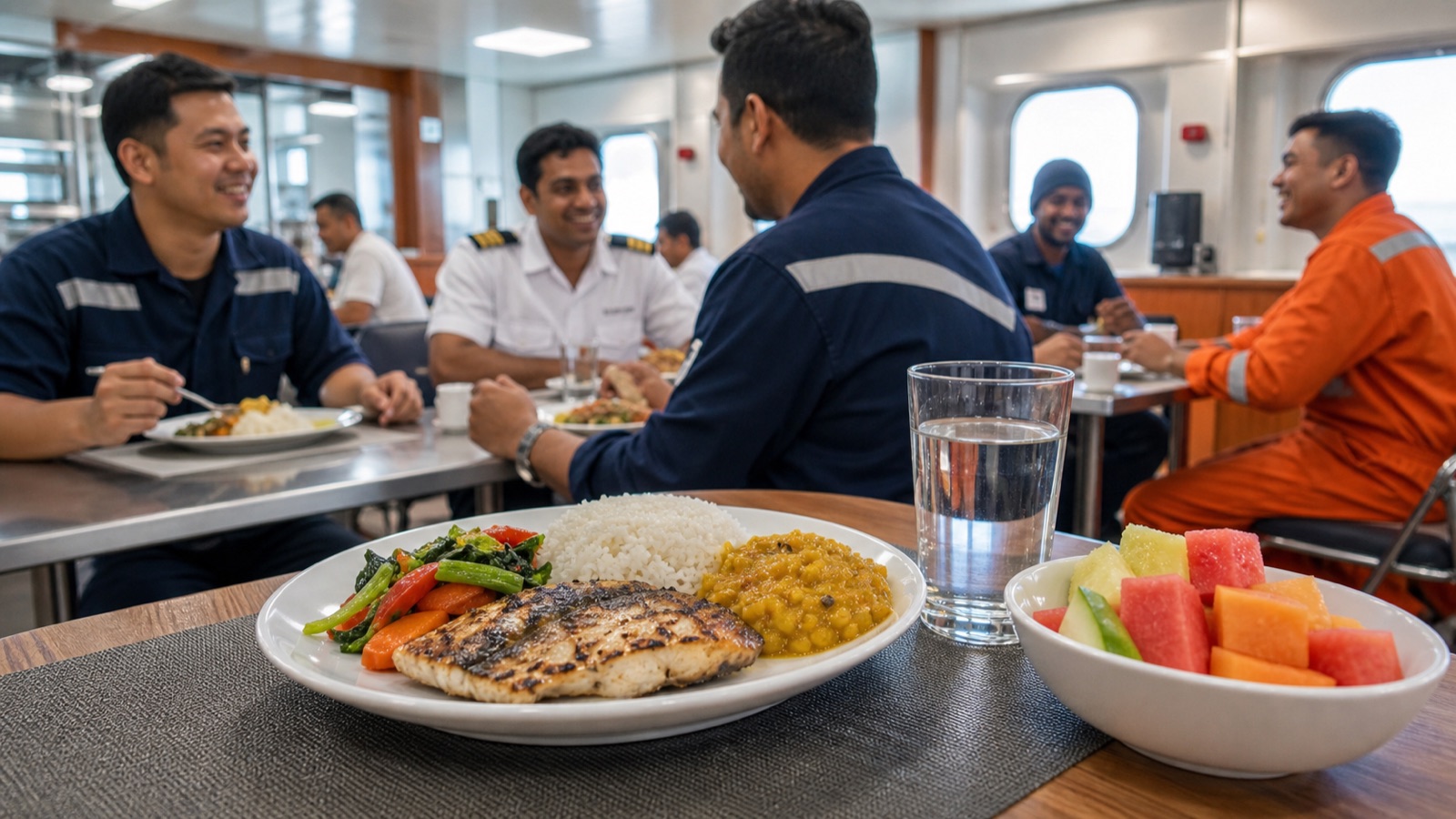
Healthy eating at sea is shaped by supply, storage, catering, culture, religion, watch patterns, and workload. Individual choices matter, but shipowners and operators also have responsibilities. Current MLC requirements reflected in Malaysia’s shipping notices address suitable quantity, nutritional value, quality, variety, cultural and religious needs, and hygienic preparation of food and drinking water.
Build a balanced meal from what is available
Aim for a practical pattern rather than a perfect diet:
- Include vegetables or fruit where safe and available.
- Choose a protein source such as fish, egg, chicken, dhal, beans, tofu, or another suitable option.
- Add rice, bread, noodles, potatoes, oats, or another energy-giving carbohydrate appropriate to the work.
- Use fried, highly salted, or very sugary foods less often when alternatives exist.
- Adjust portions to physical demand, health needs, and medical advice.
A Malaysian and multinational crew may have different dietary needs. Variety and respectful planning help everyone eat adequately. Religious and cultural requirements should not be treated as an inconvenience.
Protect hydration during heat and physical work
Drink regularly rather than waiting for intense thirst. Keep safe drinking water accessible under vessel rules. Hot environments, heavy PPE, engine-room work, and deck activity can increase fluid loss.
Possible dehydration signs include thirst, dry mouth, dark urine, headache, dizziness, reduced concentration, and unusual tiredness. These can also have other causes. Report severe symptoms, confusion, collapse, or inability to drink under the medical procedure.
Very high water intake in a short time can also be harmful. Follow medical and company guidance on hydration and electrolytes, especially during extreme heat or illness.
Plan around watches
Large meals immediately before sleep can make rest harder. For night watches, prepare an appropriate meal or snack instead of relying only on sugary drinks. Use caffeine carefully; frequent late use can interfere with recovery sleep.
Practical options may include fruit, yoghurt, nuts where allergy controls permit, sandwiches, eggs, oats, or leftovers stored safely. Food safety rules always come first.
Food and water are also workplace standards
Speak up when there is a repeated concern about spoilage, pests, unsafe water, inadequate quantity, poor hygiene, or failure to meet dietary needs. Note dates and facts. Use the vessel’s reporting and complaint procedures. Do not frame a systemic supply or catering problem as an individual failure to “eat better.”
Respect the cook and catering team. They work within budgets, stores, equipment, schedules, and crew expectations. Specific, respectful feedback is more useful than insults. Leadership should ensure the department has sufficient resources and safe working conditions.
A simple pre-voyage and weekly check
Before departure, disclose medically necessary dietary information through the proper confidential process. Bring permitted personal items only under company, customs, and biosecurity rules.
Each week ask:
- Is safe drinking water consistently available?
- Are meals varied enough to eat adequately?
- Are religious, cultural, allergy, and medical needs addressed appropriately?
- Is food stored and served hygienically?
- Does the watch schedule allow access to meals?
- Have concerns been recorded and followed up?
Authoritative references
- Malaysia Marine Department: MLC 2022 amendments notice
- ISWAN: Seafarer health and wellbeing resource library
Image guidance
OFFICIAL REFERENCES
Verify at the source
- View official guidance ↗www.marine.gov.my
- View official guidance ↗www.iswan.org.uk
This guide provides general educational information. Requirements and remedies depend on the vessel, flag, contract, collective agreement and circumstances. Seek qualified help for your case.