
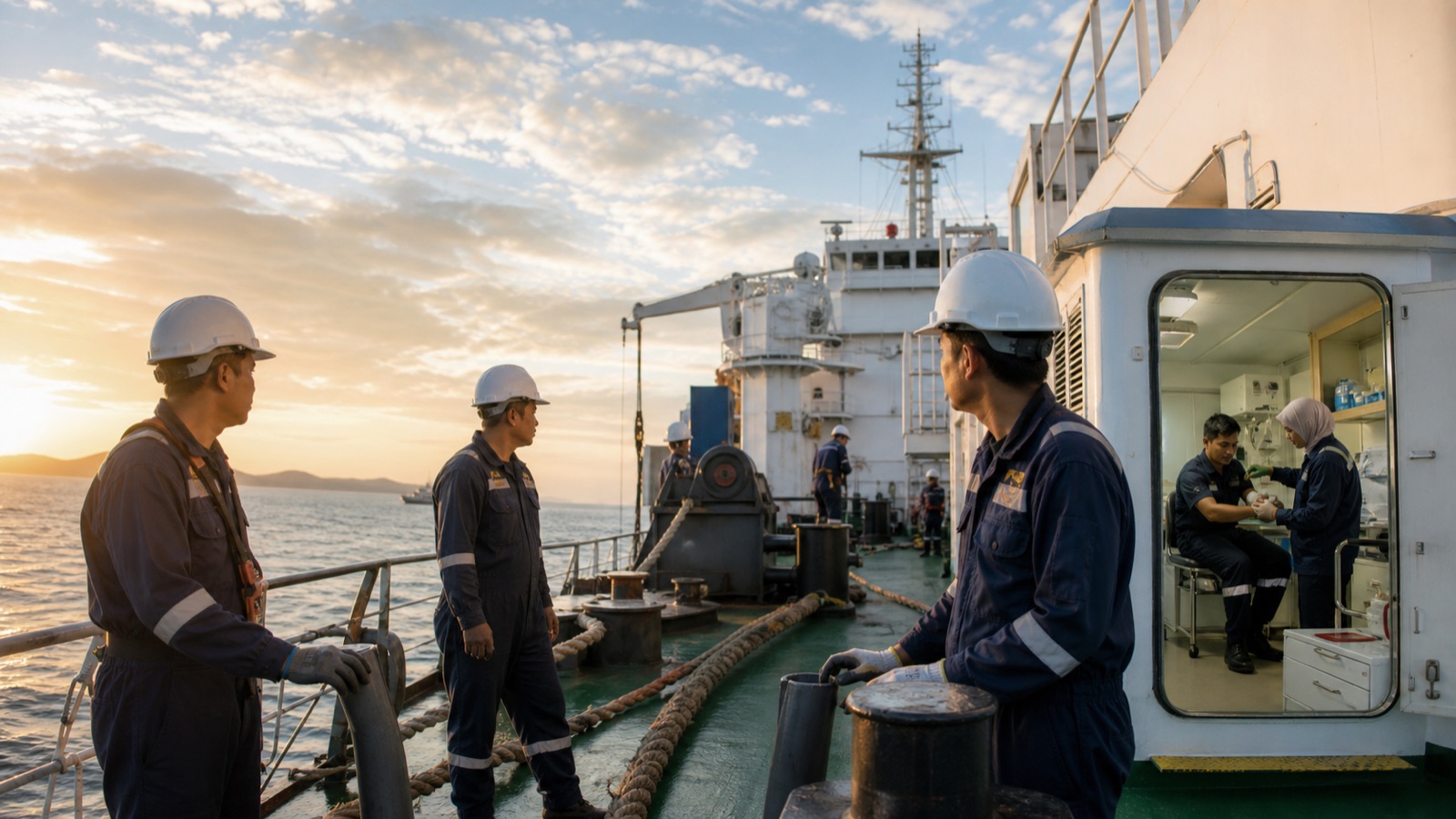
Seafarers work across borders, but they do not leave their rights ashore. Your protection may come from several layers at once: your Seafarer Employment Agreement (SEA), a collective bargaining agreement (CBA), the law of the ship’s flag state, rules enforced in a port, and international standards such as the Maritime Labour Convention, 2006 (MLC 2006).
Four rights to remember
The MLC framework is built around four practical ideas:
- A safe and secure workplace that meets safety standards.
- Fair terms of employment.
- Decent working and living conditions on board.
- Health protection, medical care, welfare measures and social protection.
These are starting points, not a complete answer to every case. The exact rule may depend on the vessel, flag, contract, CBA, voyage and country involved.
Know which documents matter
Before joining, keep your own copy of:
- your signed SEA and any referenced CBA;
- passport, seaman card or discharge book, certificates and medical documents;
- wage scale and agreed overtime rate;
- vessel name, IMO number, flag, owner, operator and recruitment agency details;
- emergency, union and company contacts.
Do not rely only on documents held in a company portal or on a ship’s computer. Keep secure copies that you or a trusted family member can reach.
Warning signs
Ask for advice when you see unexplained deductions, repeated late wages, unsafe work without proper controls, false records of work or rest, poor food or water, blocked access to medical care, pressure to surrender identity documents, or retaliation after a concern is raised.
What to do next
- Record facts, dates, names and what happened.
- Preserve messages, statements, photographs and documents where lawful and safe.
- Use the onboard complaint procedure when appropriate.
- Contact NUSPM or an ITF representative early, before records disappear or the vessel sails.
- In immediate danger, follow the vessel’s emergency procedures and contact the responsible onboard authority.
The ILO MLC portal explains the international framework. ITF Your Rights offers practical union guidance, while the Malaysia Marine Department seafarer portal provides Malaysian services and notices.
Print-friendly checklist
- I have my signed SEA and CBA.
- I know the vessel’s IMO number and flag.
- I understand wages, overtime, leave and repatriation terms.
- I can access my documents off the ship.
- My family has reliable contact details.
- I know how to contact NUSPM or ITF.
OFFICIAL REFERENCES
Verify at the source
- View official guidance ↗www.ilo.org
- View official guidance ↗www.itfseafarers.org
- View official guidance ↗www.marine.gov.my
This guide provides general educational information. Requirements and remedies depend on the vessel, flag, contract, collective agreement and circumstances. Seek qualified help for your case.